
"Willingly, like an heir."
On the novels of Edward Lewis Wallant

Atheism—which, like what it opposes, is a form of belief that insists on the truth of what it cannot possibly know—puts forth a vision of those who believe in God as submissive, supplicant, cowed, as fearful of the supreme being they worship as they are reverent.
The protagonists in Edward Lewis Wallant’s novels The Human Season (1960) and The Pawnbroker (1961) are furious believers. It would never occur to them not to believe in God, but what compels that belief is that they have experienced tragedy on both the personal scale and the historic scale. Berman, the Ukrainian-Jewish immigrant plumber of The Human Season is entirely upended to find himself widowed at 49; Sol Nazerman, a former professor turned Harlem pawnbroker, has lost his beloved wife and family in the Holocaust. The cries of pain that express themselves in rants, though, are always in defiance of God, never in denial. In Wallant’s novels, to believe in God is not to receive a promise of salvation and thus a release from suffering but to become both God’s witness and, as much as is humanly possible, His agent. Which means possessing an intense awareness of the pain of being human, which both encompasses and supersedes their own pain, ameliorating that pain when they can, and being burdened and blessed with the realization that human pain is inseparable from the overlooked pleasures of the world God created. Not the overwhelming wonders always cited as divine creation but the things so common they have ceased to inspire wonder. Towards the end of The Human Season, Berman, unstinting in his work ethic, gives himself a rare day off to take a bus trip from his home in the suburbs of New Haven to the seaside. He watches the people around him, the children, the young women in their bathing suits, an old arthritic woman bobbing up and down, “a beatific expression on her ancient face.” And what Wallant describes welling up in him, overpowering him, is not joy but instead “bedlam . . . tears, laughter, anger, circulating too fast to ruffle his face with its absent smile.” The weather is both beautiful and punishing, sunny but so hot Wallant describes the air itself as “breathless.” What follows is a drenching summer storm, pouring down from a black sky that might be a baptism but a baptism into the intermingled existence of hurt and balm. What Berman comes to understand, as does the teenage protagonist of Wallant’s The Children at the Gate (1964), is that this “would be the death of him, [and] would be the life of him too.”
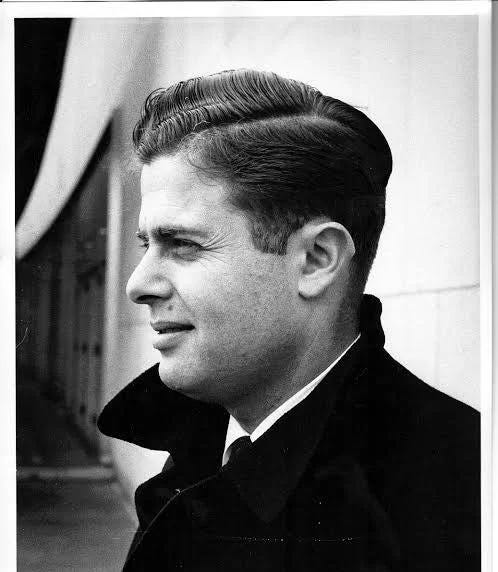
Born in New Haven, Wallant was part of the wave of Jewish-American writers that produced Philip Roth and Saul Bellow and Bernard Malamud and, a few years before them, Norman Mailer. He was a gunner’s mate in the Navy during World War II and worked in advertising as an art director. While working he studied literature and writing at the New School. The New York City of his books, a great and battered polyglot city was the city he encountered working and studying there and that’d depicted so clearly, lovingly at times, though without a trace of sentimentality. Wallant is in all ways a man out of time. Not just because he has been dead sixty-four years, having died of an aneurysm, at 36, leaving behind a wife and three children, and two unpublished novels, The Children at the Gate and the 1963 The Tenants of Moonbloom, but also because his fiction, so redolent of human suffering, is distinctly out of place in a culture that has come to equate compassion with the belief that victims are so weak, so permanently scarred, that the only existence open to them is a permanent state of debilitation, and that they can’t be expected to acknowledge anyone else’s pain. What is so hard and so profoundly compassionate about The Human Season and The Pawnbroker is Wallant’s insistence that even the worst doesn’t excuse us from engagement with the world, doesn’t excuse us from seeing and acknowledging and easing the pain of others.
Keep reading with a 7-day free trial
Subscribe to Crackers in Bed to keep reading this post and get 7 days of free access to the full post archives.