
The Racist
On the face of John Roberts

In Samuel Fuller’s suppressed 1982 White Dog, as strong an antiracist movie as America has produced, a young woman played by Kristy McNichol nurses back to health a snow-white dog she’s injured with her car only to discover the animal has been trained to attack and kill people with black skin. Leaving FOUND posters over Los Angeles eventually results in a visit from an old man and his two little granddaughters.
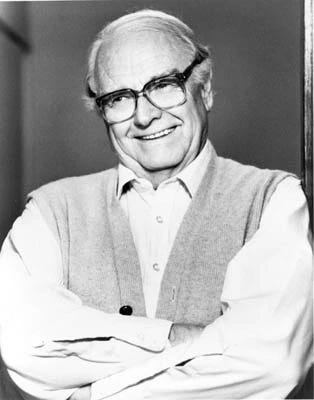
In the role is Parley Baer, whose name likely means nothing to you but whose face is instantly recognizable from the character roles he did on TV and in the movies over a career that stretched from 1950 to 1996. Usually cast as a crusty authority figure or an affable small towner, in White Dog Baer is in cuddly grandfather mode right down to the cardigan, all smiling hominess as he’s thrilled to find out that his missing pet is alive and well. “Did you train him?” McNichol asks, and he smilingly acknowledges that he did. “To be a white dog?” she asks, thinking she’s brought the man up short. What she gets instead is an even deeper smile, an even more pronounced pride. “Best of the lot,” he says.
This isn’t the stereotypical moment when a villain’s respectable civic face is revealed to have something darker underneath. Fuller had no faith in the liberal pieties about the human capacity for change. Some identities go so deep, the movie is saying, they can never be cut out of us. That’s the source of the movie’s anger and its tragedy. This old man isn’t hiding what he is, he sees no reason to. His racism is the source of everything that he is. In a movie two years into the Reagan presidency, two years into America’s journey from representative democracy to authoritarian, aspiring-fascist state, Fuller put on screen a character who has no use for euphemism or code. This almost-relic of an actor becomes, in Fuller’s film, the face of America’s future, the future where Americans will no longer feel it necessary to hide their racism.
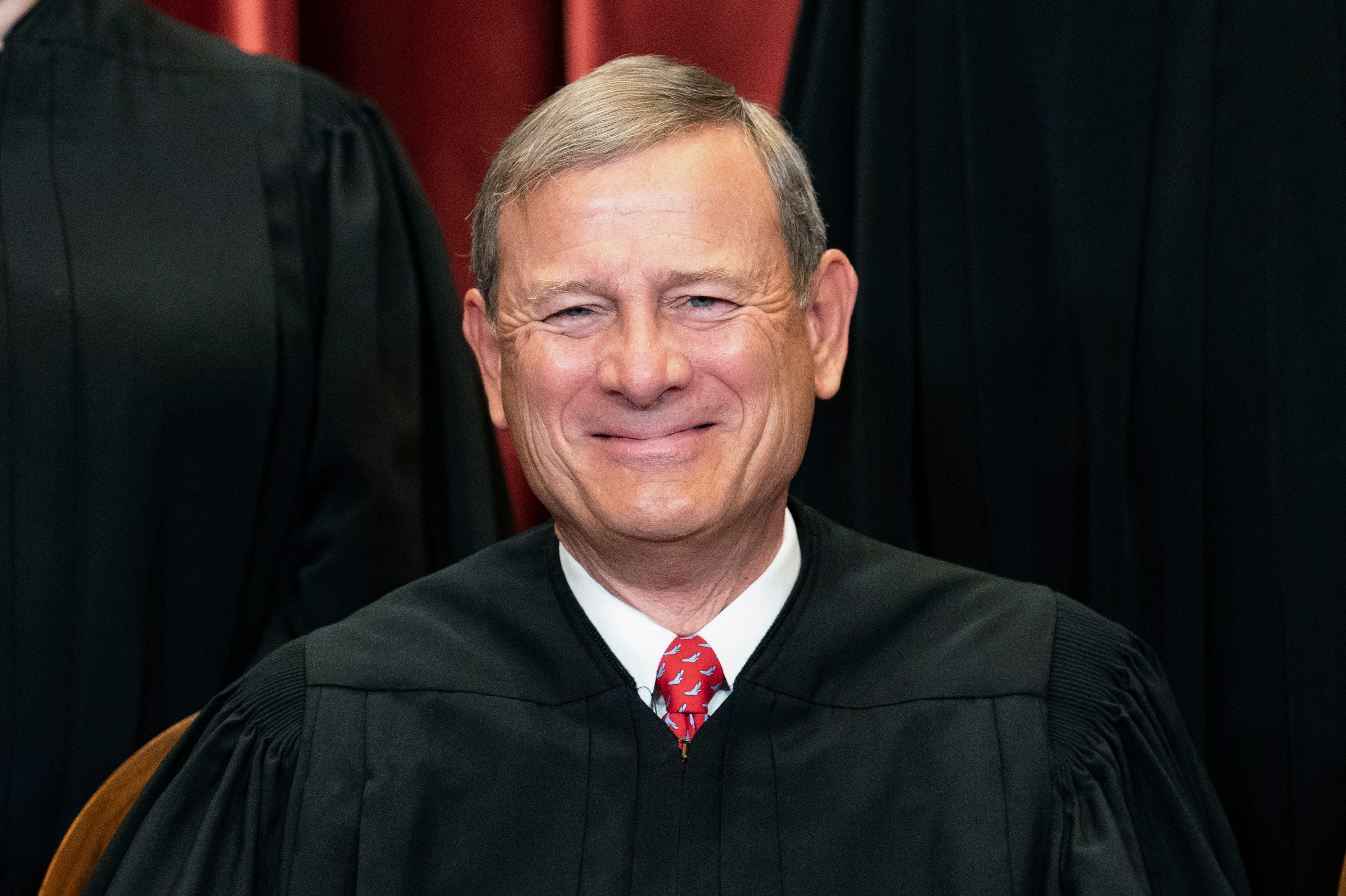
Since the bought-and-paid for thug majority on the Supreme Court gutted the Voting Rights Act last week, I’ve seen Parley Baer’s open, beaming face, so content in its racism, as the one awaiting John Roberts. For the first years of his tenure, it was common for liberals to think of Roberts as the face of reason, the one who would hold back the extremity of scum like Scalia and Alito. This was used even to explain his failure to discipline Clarence Thomas, as openly corrupt a Supreme Court justice as has ever served. It was a failing, pundits said, but the failing of a man trying to steer clear of divisiveness. The rictus grin on Roberts’ face was the face of someone trying to put a placid, agreeable front on inner roiling panic, the state that, in the movies, Laura Linney has made her specialty.
But the confident look on Roberts’ face now is that of a man steadily and consistently being freed to be himself. And of course, if we had been smart about him, that’s what we’d have expected of Roberts all along. In the ‘80s as a staff lawyer for the Reagan regime, Roberts argued consistently against expanding the Voting Rights Act, a decision he later claimed was his simply following the administration’s policy. Though at no point in his career has this only following orders claim prevented him from arguing consistently in favor of “state sovereignty,” the polite term for keeping the Blacks in their place.
But if the ascent of Trump and the renewed vigor of open White supremacy have freed Roberts to be who he always was, he himself is still standing in the way of his full self-realization. It’s easy to look at Alito or Gorsuch and see the enemy. It has always been absurdly easy to see the enemy in Clarence Thomas, a man who’d happily lend a rope at a lynching to prove he has no time to be limited by anything as petty as race—though there is no prominent Black public figure who has borne as large a racial grudge as Thomas. Roberts, though, still craves respectability. Which is why, in the days after the Callais decision that left the Voting Rights Act for dead, and the subsequent decisions allowing Tennessee and Louisiana and now apparently Alabama to redraw voting maps in order to permanently exclude black voters from electing their chosen representatives, Roberts has once again attempted to get by with the only-doing-my-job-lie. On May 6, speaking in Pennsylvania, Roberts said that the public mistakenly believes that the Supreme Court are political actors when all they are doing is interpreting the law. He and his fellow jurists are, he was claiming, the essence of impartiality.
Is Roberts arrogant enough to expect people to believe this, or is he so stupid that he himself actually believes it? This is a man who is at the head of the most flagrantly antidemocratic institution in a—now nominally-- representative democracy, an institution that, unlike every other in government, has no required code of ethics. (Harvard Law Professor Nikolas Bowie has argued sensibly and cogently that it is time to abolish—or at least radically reform—the Supreme Court, an argument that will no doubt be laid out in greater length in his book, Supremacy: How Rule by the Court Replaced Government by the People. written with Daphna Renan, out in September.) In a country of more than 342 million, John Roberts is one of nine people who has the power to overturn democratically enacted laws. Anyone who participates in that process, whether for good or ill, is by definition a political actor.
Roberts’ claim, as idiotic and insulting as it is, is the most prominent example of the strain that has coursed not just through the judiciary and politics in the last few years, but journalism as well, the belief that procedure and empty ethics are more important than the misery and hatred and injustice and, inevitably, death, that will be the result of your decisions. It’s a way of thinking and acting that mocks the very idea of public engagement and civic (and moral) responsibility).
One writer who has not fallen prey to this is the popular historian Thomas Ricks whose extraordinary and pretty-much ignored 2002 Waging a Good War, studied the Civil Rights movement as a nonviolent military campaign. “In the 1960s,” Ricks begins, “the United States became a genuine democracy for the first time in its history, as laws and practices that prevented many Black Americans from voting were challenged by the civil rights movement.” The implication is clear: an America that prevents its citizens from voting is not a democracy and those who work to keep citizens from voting are enemies as surely as the enemies we faced in World War II.
The other face I see looking at Roberts is Trump, not just because Roberts is working to do his bidding but because of another connection. At Arlington National Cemetery in 2017, Trump said of the soldiers who had died in combat, “I don’t get it. What was in it for them?” The comment was denied by Trump, and confirmed by administration officials, as was Trump’s comment calling fallen WWII vets “suckers” and “losers.” Roberts slandered veterans, too. The vets he slandered are not buried in Arlington. They were those who marched and were beaten or killed in all the Civil Rights battles but particularly the battle for voting rights. Among them are:
--James Meredith, shot in Hernando, Mississippi on June 6, 1966—the twenty-second anniversary of D-Day—at the beginning of his one-man March Against Fear.
--John Lewis, future congressman, beaten by Alabama state troopers on the Edmund Pettus Bridge on March 7, 1965.
--Reverend James Reeb, a Universalist-Unitarian minister beaten by a mob in Selma, Alabama on March 9, 1965. He died of his injuries two days later.
--Viola Liuzzo, shot to death by three Klansmen on March 25, 1965, as she rode home from the Selma to Montgomery march for voting rights.
--Andrew Goodman, James Chaney, Mickey Schwerner, murdered on June 21, 1964, their bodies buried in an earthen dam, at the start of Freedom Summer in Neshoba County, Mississippi, the location at which newly chosen Republican presidential nominee Ronald Reagan would begin his 1980 campaign, giving a speech about states’ rights.
--Fannie Lou Hamer, beaten in a Mississippi jail on June 9, 1963, sustaining injuries that contributed to her death fourteen years later, who, at the 1964 Democratic Convention outlined the threats she had received and asked the question that the country has yet to answer, “Is this America?”
--Jim Zwerg, beaten on May 20, 1961, at the Montgomery, Alabama Greyhound station for his participation in the Freedom Rides.
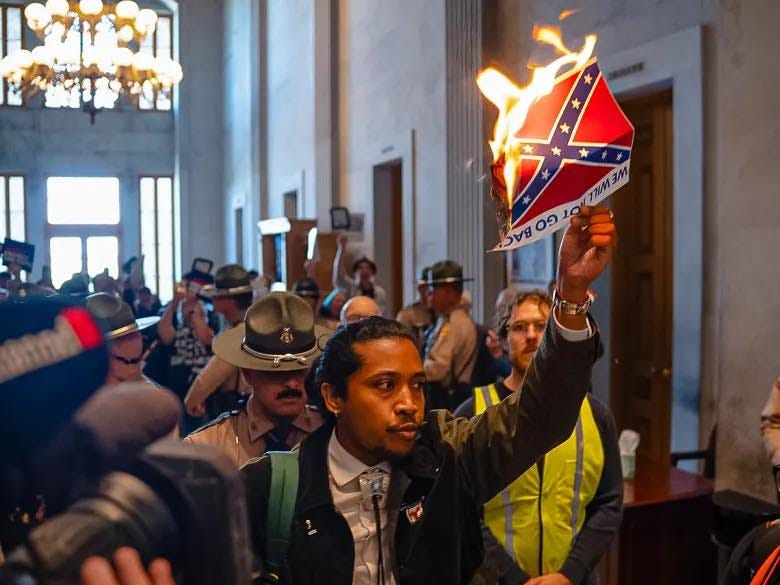
Given that the road to a new Voting Rights Act may be more rigged than the one those brave people faced, their sacrifices and integrity may yet serve as a mockery to the tactics that may be needed to triumph once again over the White supremacist control of voting. Where they were able to act sure of their victory because they were sure of the righteousness of their cause, it may be now that our opposition requires an edge of threat. That edge was there in Tennessee State Representative Justin Jones burning a Confederate flag, the American swastika, in the Tennessee State Capitol rotunda after Republican—you should pardon the expression—lawmakers obliterated the only black majority voting district in the state.
And it’s there in words of a figure I hold in no particular esteem, a figure who abandoned the principles of the Civil Rights movement, Stokely Carmichael, for the easy and opportunistic and empty rhetoric of revolution. In June 1966, as part of the group that had taken up the fallen James Meredith’s March Against Fear, Carmichael told his fellow marchers, all of them under threat, “You tell them white folk in Mississippi that all the scared niggers are dead.” It’s time to tell that to five white folk, and one black one, on the Supreme Court.